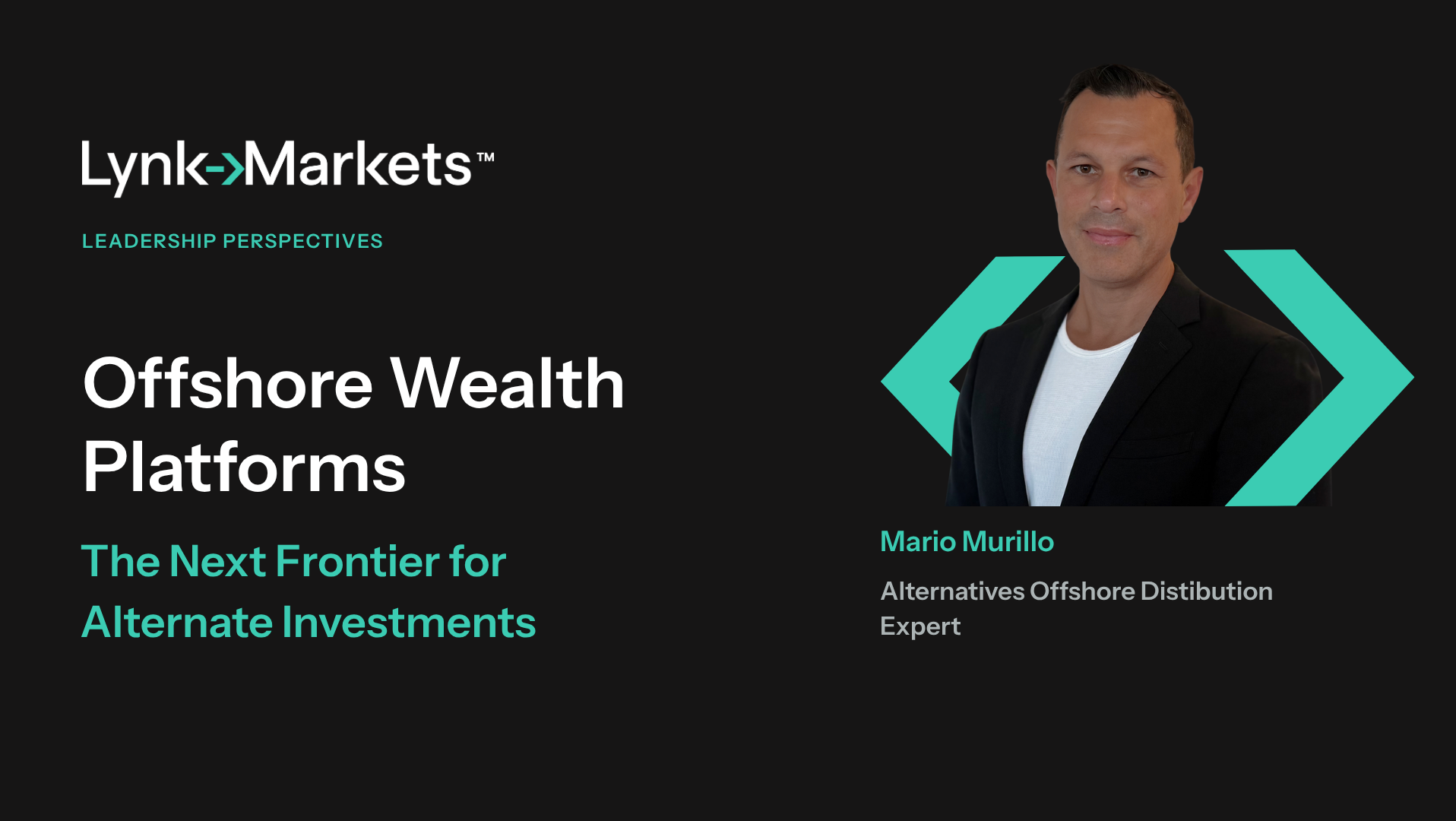
Offshore wealth markets are moving through the same alternatives adoption curve that U.S. private wealth experienced over the last decade. The difference is that offshore markets are doing it faster, more selectively, and with a much sharper eye and emphasis on cross-border distribution efficiency. For managers paying attention, that is not a parallel story. It is a leading indicator.
The offshore channel is already moving. The gap being filled now is not one of demand. The demand is there. The real gap is infrastructure, education, and distribution design. The managers and platforms that understand this early will be the ones who shape how private markets reach international wealth over the next decade.
Why Offshore Allocators Historically Underallocated
For years, offshore wealth platforms — the private banks, international intermediaries, and multi-family offices serving clients across Latin America, Asia, and the Middle East — kept alternatives at the edges of their portfolios. The reasons were structural: fragmented regulatory environments, limited access to institutional-grade managers, and subscription processes designed for institutional buyers rather than wealth intermediaries.
The result was a persistent gap between client interest and actual deployment. Clients wanted access. Advisors needed better tools. Platforms lacked the operational framework to deliver private markets efficiently. Managers, largely focused on the U.S. institutional and RIA channels, were not building for an audience they did not yet understand. That is changing.
What Has Changed
Several forces have converged to close that gap and accelerate the adoption curve.
Private markets have democratized at the product level. Private credit, infrastructure, secondaries, evergreen private equity, and semi-liquid structures were built to expand the wealth channel. Now they are showing up in offshore markets with real momentum. Offshore investors are looking for institutional-quality exposure through wealth-friendly wrappers, and the product shelf to deliver it now exists.
At the same time, international platforms have matured. The fintech infrastructure is better. Regulatory appetite and the advisor sophistication across key offshore hubs have reached a level where distribution at scale is operationally viable in ways it simply was not five years ago.
The market did not suddenly appear. It was always there. The “plumbing” finally started catching up.
Offshore Markets Need Different Packaging
This is where many managers get it wrong. They assume a product that works in the U.S. wealth channel will travel offshore with a few minor adjustments and a new pitch deck. It rarely does.
Offshore distributors evaluate alternative products through a distinct lens: regulatory compatibility across jurisdictions, feeder structures adapted to local legal frameworks, liquidity windows calibrated to client expectations, multilingual materials, and seamless integration with the platforms their advisors already use.
Minimum investment sizes matter. Subscription complexity matters. Reporting standards matter. The smallest operational friction can become a reason a product never gets traction.
The best alternative product does not always win offshore. The easiest product to distribute often does. Managers who understand that principle early will build distribution relationships that compound over time.
Education Is the Real Distribution Bottleneck
In many offshore channels, alternatives are still sold, not bought. Advisor fluency in private credit, infrastructure, or secondaries remains uneven, not because interest is lacking, but because these asset classes have evolved faster than the education infrastructure around them.
Managers who lead with performance data alone will consistently underperform their distribution expectations. The winners will build education directly into their go-to-market strategy: structured materials, advisor training, simple explanations, and ongoing support that helps advisors speak with confidence. Explaining what an evergreen fund actually does, how redemption mechanics work, or why infrastructure carries inflation protection is not a marketing function. In offshore markets, it is a distribution function, and often the most important one.
Technology Will Decide the Winners
Every manual step in a subscription process, every reporting gap, every KYC bottleneck is a reason for an advisor to recommend a different product next time. Subscription digitization, automated compliance workflows, integrated data rooms, and transparent portfolio reporting are no longer nice-to-haves in the offshore wealth channel. They are the baseline for platforms that expect to grow.
The offshore market scales when operational complexity disappears. Managers and platforms that invest in that infrastructure today are not just improving efficiency. They are building a competitive position that will be very difficult to replicate later.
The Firms That Win Will Build Ecosystems, Not Products
The offshore alternatives opportunity will not be captured by product launches alone. The firms that define this market over the next decade will be those that build ecosystems: investment strategies combined with education platforms, distribution infrastructure, technology, and long-term relationships with the gatekeepers who sit between managers and capital. They will function simultaneously as investment managers, content engines, operational partners, and capital facilitators.
That model is already taking shape at the institutional level. It is arriving in offshore private wealth next. For managers willing to adapt their distribution model to the realities of this channel – instead of trying to export a playbook that was never built for it – the opportunity is much larger than most realize.
The capital is there. The clients are there. The next chapter will be defined by the firms that can combine access, education, technology, and execution into a distribution model built for the realities of offshore wealth.
Mario Murillo is Regional Director for the United States at LynkMarkets, a fintech platform empowering private market distribution across Latin America and international wealth channels.